
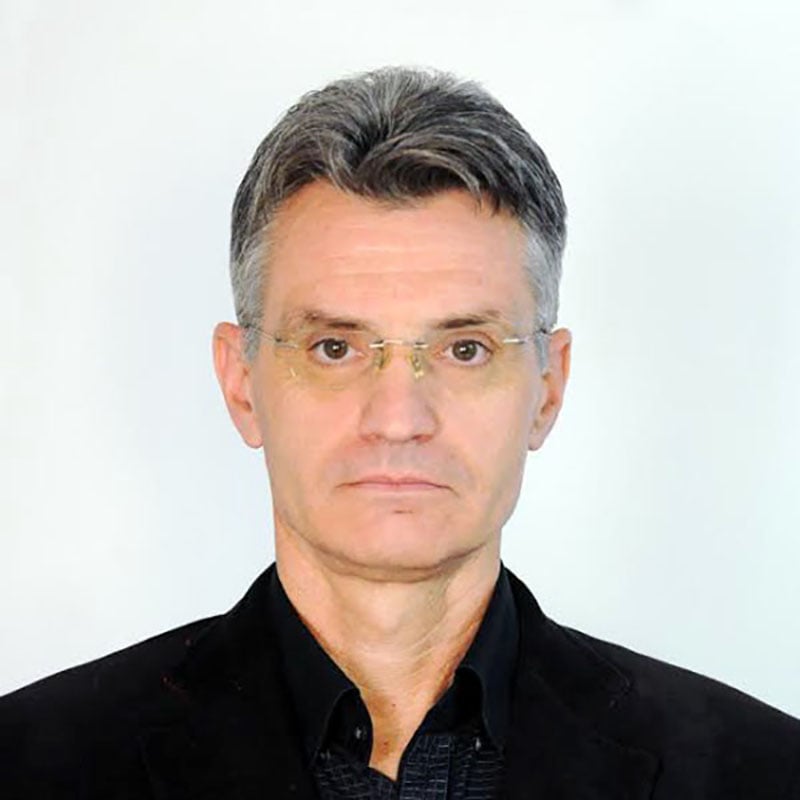

Former captain of the national volleyball team, Vladimir Nikolov, is stepping into a new role – outside of sports. In recent days, it became clear that he will be part of the political project associated with President Rumen Radev. In a conversation with our media, Nikolov spoke about his decision to enter politics, the motivation behind it, and what he would like to change in Bulgarian sports.
- On February 13th, you said you hadn't held talks about participating in politics. Today, you are expected to lead a list. What happened this month?
- Things change. We held further discussions with President Rumen Radev and concluded that this is the most beneficial course of action.
- When did you actually make the final decision to get involved?
- Perhaps about a week ago. This wasn't a decision made in a single day – it was a process.
- Who made the first move? Did you seek a political role, or were you invited?
- I was invited.
- Why did you decide to enter politics precisely now?
- If someone had offered me participation in politics a year ago, I would have told them I wasn't interested. But in recent months, I've had many thoughts on the subject. Perhaps I've simply matured for this decision.
There's a famous saying – even if you don't engage with politics, politics engages with you. In discussions with President Radev, we started with the fact that he really likes what we've done at 'Levski'. He asked me if a similar model could be applied at a national level. I told him it could.
I will offer my expertise in the field of sports to President Radev and the 'Progressive Bulgaria' project.
- What is your main motivation – a cause related to sports, or a broader public ambition?
- The two things are connected. One of the moments that made me reflect was the reaction of close friends when I started sharing the idea. Many of them said: 'Why do you need this? Politics is garbage, everyone is a scoundrel.'
I don't think everyone is a scoundrel. And I don't think we should leave only the 'scoundrels' in politics. For me, the cause is precisely this – for decent people to enter politics and for public attitudes to change.
- Is there a specific problem in Bulgaria that made you say: 'It's time for me to get involved'?
- I believe that many things in Bulgaria can be done better with a little effort. Bulgaria is a small country, and it's not that difficult to make a difference if there's a will.
- Is your goal to become a member of parliament, or to participate in real governance?
- My expertise is in sports. There are two possibilities – either working in the parliamentary committee on youth and sports, or in the Ministry of Youth and Sports. I would rather work in the Ministry of Youth and Sports, because there my expertise would be most valuable, and that's where the real work is.
- What role did President Radev play in your decision?
- He is a person I respect for his clear positions on a number of public topics and whom I trust. If the invitation had come from another political force, I most likely would not have accepted it.
– At the end of last year, you started a country tour with the book "Visoko" (High/Tall). Some people interpret it as preparation for a broader public role. Is that so?
– No. That was a coincidence. The decision to join this political project was made long after those meetings.
– Did these meetings help you gauge people's sentiments and decide that you want more active participation in public life?
– Yes, definitely. The interesting thing is that everywhere in the country, people were talking about the same problems. When it comes to sports – all parents want their children to play more sports, to combat digital addiction, and to provide them with better conditions for education and sports.
– There are already many reactions on social media – some quite critical. Did you expect this?
– Yes, I'm not surprised. I am the same person I was yesterday. People who until yesterday said "bravo" for what I did, today criticize me. In fact, they are not criticizing me – they are criticizing politics. And in my opinion, politics should not be a dirty word.
– As an athlete, you were a figure who united people. Politics, however, divides. Does this concern you?
– No. I am the same person with the same values. The fact that I will have a different job doesn't make me a different person.
– If you get the opportunity to influence sports policy, what is the first change you would make?
– One of the first things is related to the payment of coaches in national teams. Currently, the remunerations that the Ministry of Sports provides for them are extremely insufficient. It is not normal for a coach with higher education and many years of experience to receive such low pay.
– So, the state should support Bulgarian sports – both national teams and clubs?
– I was specifically talking about national teams, but this also applies to clubs. Ultimately, for sports to exist, there must be a state policy in that direction.
– Moni and Alex are among the most beloved young volleyball players in Bulgaria. Are you worried that your political role might affect their image?
– If the fact that their father is changing jobs affects the children's image, that would be very sad for society. Children should not pay for their parents' decisions – even less so when those decisions are not a mistake.
– Did you talk to them before making the decision?
– Of course. Without my family's support, I wouldn't have taken this step.
– Why Plovdiv specifically?
– Plovdiv is a wonderful city, and I also have an emotional connection to it (his wife Maya is from the city under the hills – author's note).
– A sort of volleyball duo is forming in Plovdiv, as Loko Avia's libero Martin Ivanov is also joining the political project. Will this help you with discussions on sports topics?
– Martin is an extremely positive person and a great guy. We've known each other for years, and I would gladly talk to him about any topic. I can only say good things about him.
What is harder - to be captain of the national team or to enter politics?
To become captain of the national team requires many years of hard work and proving yourself. Entering politics is easier. But what you will accomplish there - that is the real question.
Are you ready to answer questions even outside of sports?
Of course. If you participate in public life, you must have a position on various topics.
What do you want to achieve with this step?
Ultimately, there are two options - either to say 'everyone is a scoundrel' and stand aside, or to try to do something.
I choose to try.


